Stopping Outbreaks Before They Spread
A $100 million award will expand a surveillance system for pandemic prevention
Fall/Winter 2026
- 11 minute read
- Feature

Health workers walk outside the General Referral Hospital in Mongbwalu, Democratic Republic of Congo, during the Ebola outbreak that began in May 2026.
Photo: Michel Lunaga/Getty Images
Pardis Sabeti, MD ’06, braced for bad news as she logged on to a Zoom call with the MacArthur Foundation in October 2025. A computational geneticist and professor at the Harvard T.H. Chan School of Public Health, she had spent more than a year leading efforts to secure a $100 million grant offered through MacArthur’s 100&Change initiative, which supports organizations tackling some of the world’s most critical problems. If Sabeti’s bid was successful, the money would go to Sentinel, a program Sabeti cofounded to strengthen infectious disease surveillance in Africa.
With nearly 870 applicants, competition for the award was intense, and Sabeti did not expect to win. She had even drafted a concession speech acknowledging the foundation’s difficult decision and thanking MacArthur for recognizing Sentinel’s potential. When MacArthur’s president, John Palfrey, quietly announced that Sentinel had taken the prize, Sabeti wasn’t sure she had heard him correctly. “I had to ask him to repeat what he said before it really registered,” she says.
Sabeti launched Sentinel in 2020 with her longtime collaborator, Christian Happi, director of the Institute of Genomics and Global Health (IGH) and a professor of molecular biology and genomics at Redeemer’s University in Ede, Nigeria. A translational science program that bridges gaps between lab research and communities affected by infectious diseases, Sentinel has trained health workers from 53 African countries while bringing advances in sequencing, molecular diagnostics, and data sharing directly into the places where outbreaks occur. Outbreak responses in Africa were once heavily dependent on foreign technology and expertise. But Sentinel “is changing that entirely,” Happi says. With the program’s support, African responders are increasingly taking the lead.
Sabeti notes that the award comes at a precarious time for global health and pandemic preparedness initiatives, many of which have been hit hard by budget cuts. Indeed, her lab lost several federal grants before receiving the prize, forcing layoffs even as the program was emerging as a MacArthur finalist. Now this transformational investment, announced on Nov. 18, 2025, is allowing Sentinel to expand from its initial base in West Africa into a continent-wide early-warning network.
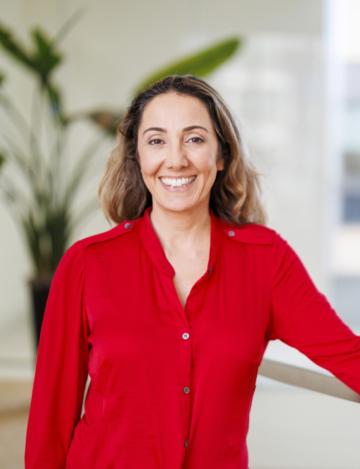
Photo: Stephanie Mitchell/Harvard University
“Our ultimate ambition is to help build a global system for detecting and stopping deadly outbreaks before they spread,” Sabeti says.
Sabeti’s drive and instincts to unite people around difficult challenges reach back to her childhood. She was born in Iran and left the country with her family in 1978, a few months before the Iranian Revolution. As a teenager in Florida, Sabeti volunteered with what’s now called the National Conference for Community and Justice, an organization founded to combat racism and religious intolerance. Later, at MIT, where she played tennis, served as class president, and studied biology as an undergraduate, she created a first-year leadership program designed to help “kids come to college with a sense of community and purpose,” she says. She went on to earn a doctorate in biological anthropology from the University of Oxford before attending HMS.
Throughout her education, Sabeti found herself increasingly drawn to research. As a medical student, she worked with Eric Lander, a mathematician and geneticist who was then at the Whitehead Institute. Lander later cofounded the Broad Institute of MIT and Harvard, where Sabeti is now also a core institute member. Ultimately choosing a lab career over a medical residency, she completed a postdoctoral fellowship with Lander, developing computational methods to detect signatures of natural selection in the human genome. Her work helped to identify genetic adaptations that protect people from malaria and other infectious diseases. But Sabeti also studied the malaria parasite itself. And that dual focus on humans and the pathogens that infect them remained central to her work after she joined the Harvard faculty in 2008.
By then, Sabeti and Happi were already building an enduring collaboration. Happi had come to Harvard from Nigeria in 2000 to pursue postdoctoral research at the Harvard Chan School, where he later became an adjunct professor, a position he still holds today. He and Sabeti met at the Broad Institute during weekly meetings devoted to the latest research on malaria and were soon bonding over a shared interest in how genomic surveillance might improve outbreak responses. When Sabeti later set out to study genetic resistance to Lassa fever, a viral hemorrhagic illness that’s endemic to West Africa, she reached out to Happi, who had since relocated to Nigeria. The pair corresponded via email, “and before I knew it, I was on a plane,” Sabeti says.
Upon reuniting, the two scientists traveled to meet with staff at the Irrua Specialist Teaching Hospital (ISTH), a tertiary medical center grappling with critical diagnostic shortages. Irrua, in Edo State, is a mostly rural part of Nigeria and a Lassa fever hot zone. Patients with Lassa fever were being diagnosed there largely on the basis of clinical symptoms. Blood samples had to be sent overseas for confirmatory testing, a process that could take weeks or even months. Sabeti saw an opportunity to help. Leveraging startup funds from her Harvard faculty position, she worked with Happi and the local staff to build up ISTH’s diagnostic and data-informatics capacity, with an aim to establish the hospital as a Lassa fever study site.
Their newly established polymerase chain reaction (PCR) diagnostic tests on site soon revealed that Lassa fever was far more common in the region than previously recognized. Like other hemorrhagic fevers, Lassa fever often presents with nonspecific symptoms, such as nausea and headache. Sabeti and Happi suspected that over the years, many West Africans with the disease had been misdiagnosed with other illnesses. With improved diagnostics, more of them could be appropriately treated. As people increasingly sought care at ISTH, Sabeti and Happi gained access to more patient samples, strengthening their ability to respond not only to Lassa fever but also to other threats.
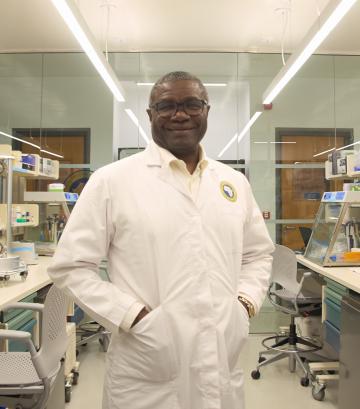
Photo: AP Photo/Ajayi Oluwapelumi
“We went from testing genomic hypotheses to providing diagnostics in our communities and then showing how diagnosis was important to reducing case fatality rates,” Happi says. “If you detect early, you can make a big difference. And if you sequence, you get a deep understanding into the nature of a virus and can develop countermeasures quickly.”
Building on their achievements at ISTH, and with an aim to foster cross-border surveillance, Sabeti and Happi established a new partnership with the Kenema Government Hospital, a major medical hub in eastern Sierra Leone. Both hospitals went on to become important reference centers for managing viral hemorrhagic fevers in West Africa. But while they had tools for diagnosing these illnesses, blood samples still had to be frozen and shipped overseas for genomic sequencing. That bottleneck ultimately drove Sabeti and Happi to found the Africa Centre of Excellence for Genomics of Infectious Diseases (ACEGID), which was renamed to become IGH in 2024.
ACEGID’s mission was to train and empower African scientists in the use of genomic technology. And its launch in 2014 came at a crucial moment: The largest Ebola outbreak yet on the continent was advancing across West Africa. Nearly 30,000 people were ultimately infected and more than 11,000 died. But ACEGID made critical contributions to the outbreak response, delivering sequencers that allowed scientists to track how the Ebola virus was evolving and spreading so they could develop better diagnostic tests. When a Liberian later identified as Nigeria’s first Ebola patient arrived at the international airport in Lagos with a fever, responders moved quickly to diagnose and isolate him and trace his contacts. “We started monitoring Ebola in Nigeria with rapid, on-the-ground diagnostics and defeated the outbreak here in 93 days with only 20 reported cases and eight dead,” Happi says.
Encouraged by what ACEGID had achieved, Sabeti and Happi hatched plans to scale the model by creating a larger network of centers focused on pandemic prevention and response. The aim was for those centers to share information about local clusters of viral infections in ways that might head off wider outbreaks. That idea became Sentinel, which was subsequently established with a major grant from the Audacious Project, a philanthropic initiative housed at TED.
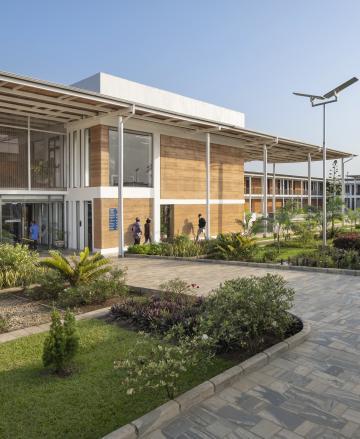
Photo: Kendon Photography
Sentinel was built around three core pillars: to detect and diagnose both known and novel viruses, to connect data sources and share information in real time so that unfolding outbreaks could be tracked, and to empower local responders with technology and training. The program operates through a hub-and-spoke model. Sentinel works with hub sites in each country, usually a university or national public health institution with existing laboratory infrastructure, government relationships, and trained scientific staff. Each hub connects to spoke sites within the country. These are typically district hospitals or community health clinics. Samples, data, and expertise flow through this network.
“The Broad provides scientific and technical support, infrastructure, and institutional backing,” says Al Ozonoff, an HMS associate professor of pediatrics at Boston Children’s Hospital and Sentinel’s managing director. “IGH and the country partners provide local expertise, government access, and the relationships that make the work possible.” Sentinel also works closely with the Massachusetts Consortium on Pathogen Readiness (MassCPR), a network of clinicians and scientists led by HMS to combat infectious diseases at local, national, and global levels.
Sentinel was initially designed to focus on viral hemorrhagic fevers, but it was also founded just as the COVID-19 pandemic was beginning, Ozonoff says. “So, it was basically repurposed for the next two and a half years.”
During that time, Sentinel and its partners rapidly expanded genomic surveillance across the continent, including sequencing the first confirmed case of COVID-19 in sub-Saharan Africa. They “directly supported sequencing efforts in 26 African countries” during the pandemic, Sabeti says. The team also supported genomic surveillance efforts in the United States, helping characterize one of the earliest documented superspreading events and later demonstrating transmission of SARS-CoV-2 from vaccinated individuals.
“What we can do is provide a ray of hope. We are here for the global community.”
The MacArthur Foundation’s award roughly doubles the total investment in Sentinel to date, building on years of support from U.S. federal agencies and philanthropic organizations. “We’re trying to be very conscientious with the money, and we’re scaling up slowly,” Sabeti says. “The important thing about how Sentinel works is that we’re supporting what’s happening on the front lines. The major institutes — the hubs — are doing the work. We’re just helping them do what needs to get done.”
Sentinel is now boosting delivery of sequencing equipment and supplies to five partner countries: Nigeria, Sierra Leone, Senegal, Rwanda, and the Democratic Republic of the Congo (DRC). “As the program grows, each new country adds a primary institutional partner and its associated spoke network,” Ozonoff says. A program steering committee was recently created, comprising representatives from each participating country, and it will expand as new countries join. Sentinel is also coordinating with the Africa Centres for Disease Control and Prevention (Africa CDC), Happi adds, with an aim to reach the entire continent.
Ozonoff describes viral sequencing as the cornerstone technology that unlocks entirely new methods for surveillance. “We want to know more than just what type of virus we’re dealing with,” he says. “We want to know: Where did it come from? How did it evolve? Is it related to infections from the past, and how does this evolution affect the transmission and severity of disease? Are there some people who are more susceptible than others?”
To help answer such questions, Sentinel is expanding deployment of new tools co-created by Sabeti’s team at the Broad Institute with longtime collaborators at Fathom Information Design, a studio based in Boston. Together, they developed Lookout, a data visualization platform that ingests and links genomic results with diagnostic, clinical, epidemiological, and public health information and then creates displays in readily usable formats. During an unfolding outbreak, Lookout helps scientists connect the dots, identifying clusters and patterns of infection that reveal a pathogen’s tracks. Importantly, frontline health workers in remote locations can enter data into Lookout offline; the information uploads automatically once an internet connection becomes available. Lookout was the national surveillance platform used in Sierra Leone during an outbreak of mpox in 2025, and it has also been used for disease surveillance in Nigeria. “We’re now in conversations with Africa CDC for a wider rollout,” Sabeti says.
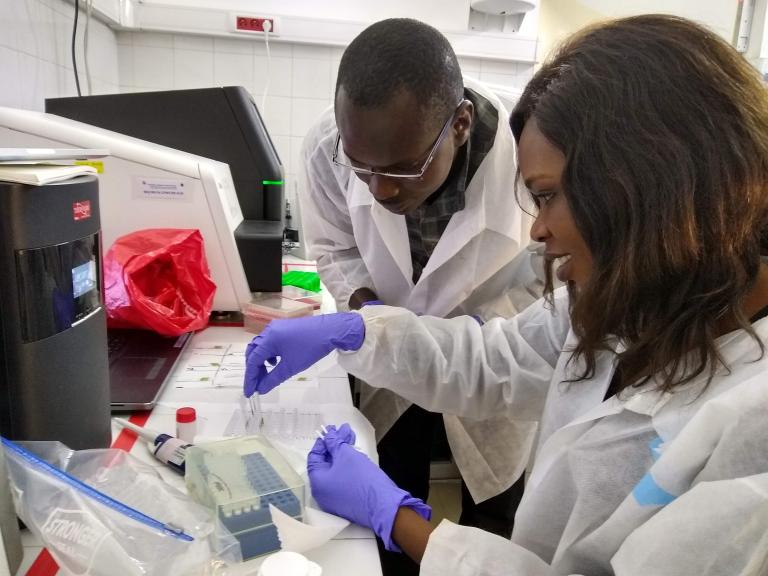
Photo: Courtesy of IGH
The Lookout platform also integrates with an open-source tool called Delphy that uses genomic sequencing data to reconstruct a pathogen’s evolutionary history. Developed by Sabeti’s lab and Fathom, Delphy applies a statistical approach that uses probability models to estimate how and when new variants emerge while accounting for uncertainty in the underlying data. The analysis is computationally intensive and requires statistical expertise that relatively few specialists have, limiting its use in outbreak response. But Delphy performs the computations at breakneck speed, making high-level genomic epidemiology accessible to health workers in the field. The technique is described in a paper that was recently published in Nature. “You can use it anywhere on a laptop or a phone,” Sabeti says. “The aim is to keep advancing these state-of-the-art tools to the frontlines, and we do it all in collaboration with our partners.”
Happi emphasizes that the approach isn’t just about empowering local responses to local problems. “We’re also trying to incentivize people to share their data so others can make use of it,” he says. “This is how we address challenges of global health security.”
Those aspirations are particularly relevant today, as yet another Ebola outbreak ravages communities in the DRC. The first suspected cases were reported in May 2026 in Mongbwalu, a remote mining town near the border with Uganda. More than 11,000 cases and 5,000 deaths were reported as of mid-November, according to the World Health Organization.
“This is not a situation where we can parachute in — we have to empower the local responders.”
Sentinel is aiding in the response. Ozonoff says the IGH has sent staff to the DRC’s national lab in Kinshasa to assist with viral sequencing and analysis. Scientists there are using Delphy to reconstruct relationships between evolving variants, which “can tell us something important about how the outbreak began and how it might continue to unfold,” Ozonoff says. Notably, the outbreak was caused by Bundibugyo virus, one of several viruses that cause Ebola. Commercially available diagnostics don’t detect it as readily as they do the more common viruses. “So, one of the first things Sentinel did was develop a PCR test that’s optimized for the virus circulating right now,” Ozonoff says. The program is working hand in hand with health officials in the DRC, he adds, on efforts to validate the test and make it available in the field. “We won’t take it all the way to the finish line ourselves,” he says. “But we are here to support the work of the DRC government to gain some control over the outbreak, and testing is an important part of that.”
The major challenge, Sabeti adds, is that the outbreak is unfolding in a conflict zone where government forces are battling several armed groups. “If we were to go on the ground, we’d create more havoc than help,” she says. “There’s not a lot of trust in our appearance. That’s part of why Sentinel’s thesis is that this really has to be done by local people. This is not a situation where we can parachute in — we have to empower the local responders.”
Happi emphasizes that Sentinel can’t fill the void left by budget cuts affecting health agencies from around the world. “What we can do is provide a ray of hope,” he says. “We are here for the global community. Sentinel is here to provide tools, technologies, and platforms that public health institutions can use to become self-sustainable.”
In the best-case scenario, Sabeti says, Sentinel will continue creating cutting-edge technologies that are cheap, accessible, lightweight, and fast. “We’re aiming to transition our systems into national programs,” she says. “But we’re not trying to build an NGO that goes on into perpetuity. We’re trying to solve problems. And ultimately, if you’re successful, you’re not needed anymore. You could say we’re trying to solve for our own extinction.”
Charles Schmidt is a writer based in Maine.