How Blue Light Kills Superbugs
Photomedicine offers a promising new avenue of treatment to combat the crisis of antibiotic resistance
- 7 min read
- Feature
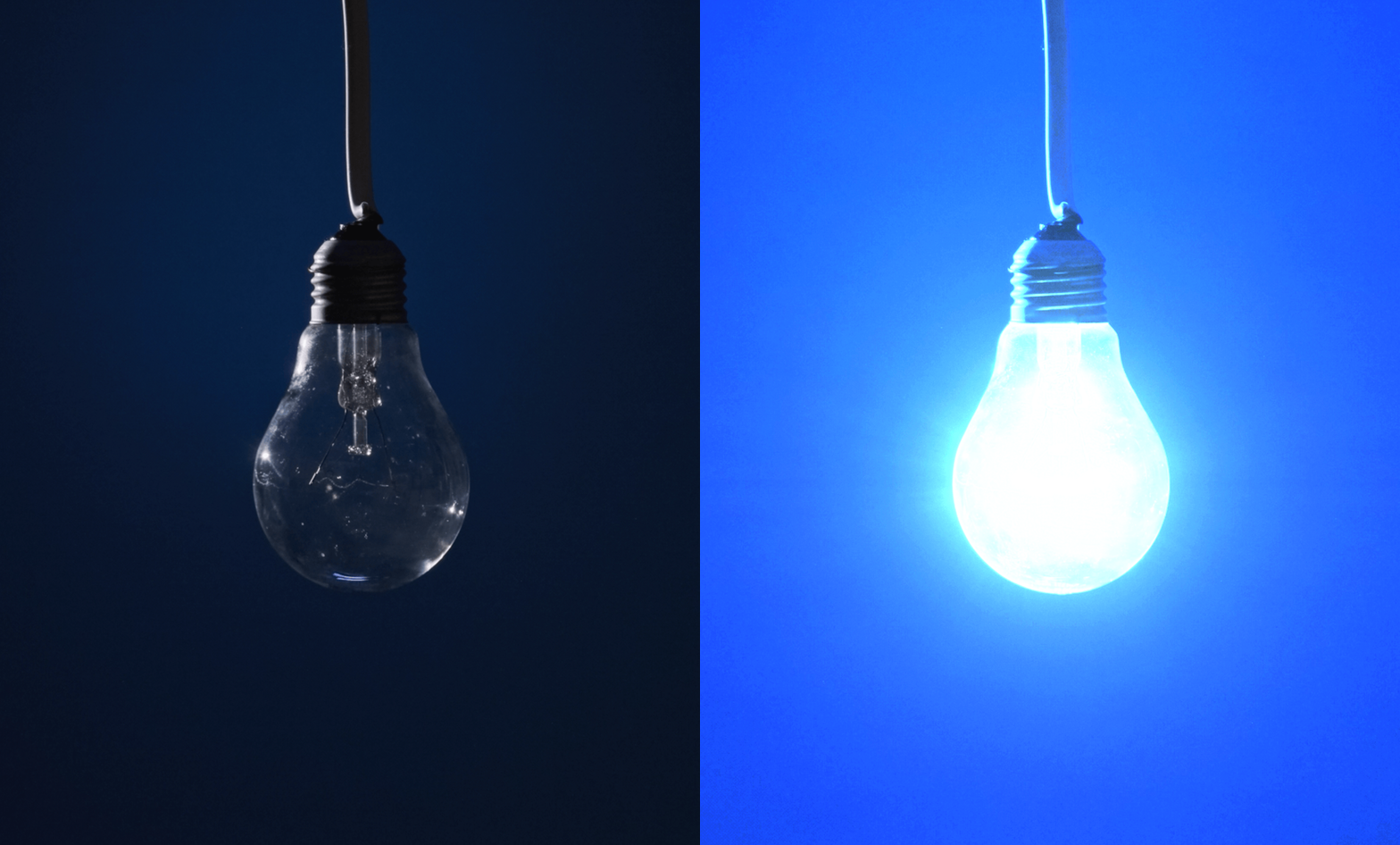
Bacteria may be among the simplest life forms, but they’re increasingly outsmarting the drugs designed to curtail them.
Take MRSA, a bug that causes staph infections. This bacterium can infect even the tiniest wounds, forming pockets of pus and stubborn skin infections. In worse cases, it can infiltrate the body, turning a scrape into sepsis. Sticking to surfaces in glue-like biofilms and hitching rides on unwashed hands, it tends to afflict vulnerable patients in hospitals.
What’s even more menacing about this microbe, though, is its status as a so-called superbug: a pathogen that has evolved resistance to antibiotics. Since the development of penicillin ushered in the “antibiotic era” in the mid-20th century, says Jeffrey Gelfand, an HMS professor of medicine, part-time, at Massachusetts General Hospital, the overzealous use of these drugs “has led to many, many different mechanisms of antimicrobial resistance,” making wounds infected with microbes like MRSA increasingly tough to treat. Some experts predict that, by 2050, drug-resistant pathogens could kill more people than cancer.
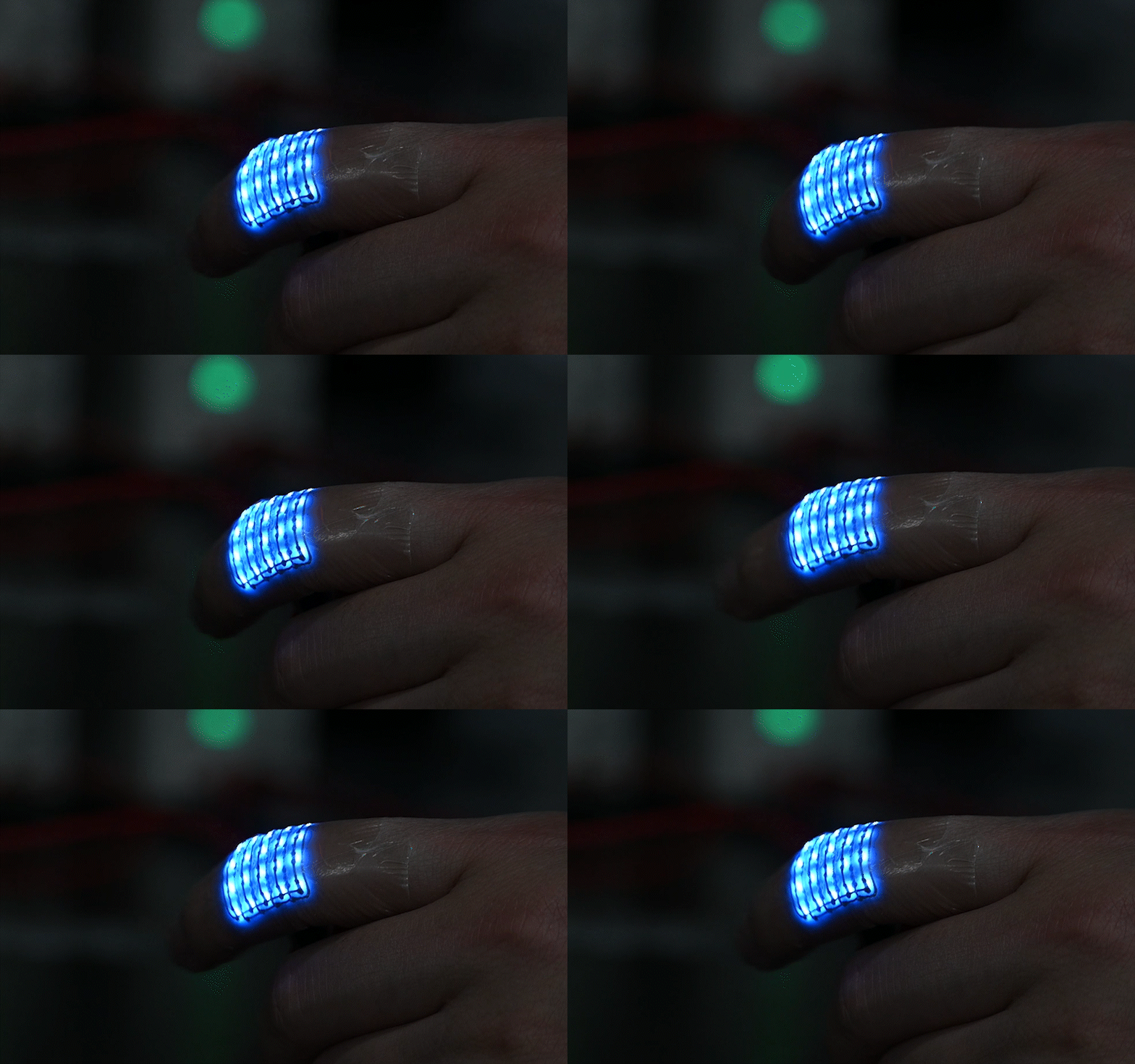
That’s why Gelfand has been exploring a new approach to tackling MRSA and other superbugs: blue light. Picture a device that looks something like a bandage made of silicone. Its active ingredient is not an antibiotic or other drug, but tiny LEDs embedded in the silicone that shine at specific wavelengths. Gelfand developed the device alongside Laisa Negri, an HMS research fellow in dermatology, and colleagues at the Wellman Center for Photomedicine at Mass General, the world’s largest academic research center focused on the effects of light on human biology.
The new tool is based on more than a decade of Wellman Center research in preclinical models revealing that blue light can curtail even the most stubborn bacterial pathogens. If proven viable in people, the approach could add a rare new option to a shrinking arsenal of defenses against drug-resistant infections.
Light as medicine
Light can exert powerful effects on living things. It’s a form of energy that acts like a wave as it moves through space and behaves like particles when it interacts with matter, delivering energy in small bursts. A light’s wavelength, the distance between the peaks of its waves, determines how we perceive its color, as well as how much energy each particle, or photon, carries.
Those photons interact with matter in different ways depending on how energetic they are. Ultraviolet light, for example, can damage cells’ DNA. That makes UV very effective at killing bacteria and treating skin infections, says Tianhong Dai, an HMS associate professor of dermatology at Mass General. But UV exposure also damages DNA in human cells, which can lead to harmful side effects like cancer.
Earlier in his career at the Wellman Center, where he has been an investigator for 20 years, Dai explored using UV light to fight drug-resistant microbes. But as he became frustrated by its side effects, he came across research on the use of blue light to treat acne by curtailing pimple-causing microbes. Blue light sits closer than UV to the low-energy end of the electromagnetic spectrum and is not directly absorbed by cells’ DNA. Dai decided to investigate whether and how blue light might combat wound-infecting bacteria that antibiotics struggle to kill.
When bugs meet blue light
In one of his first studies on antimicrobial blue light, published in 2013, Dai and colleagues beamed blue light on MRSA cells in a petri dish before zooming in on those cells using a powerful microscopic camera. Through the lens, they saw something of an apocalyptic landscape: broken cell debris, cracked cell walls, and mangled insides. The light had seemingly shattered the bacteria. They tested the light on MRSA-infected skin abrasions in mice and were the first to demonstrate that blue light could halt the growth of the drug-resistant microbe in an animal model.
Dai went on to conduct dozens of NIH-funded studies pitting blue light against a range of microbes. He demonstrated its effectiveness against Acinetobacter baumannii, for example, a superbug notorious for infecting combat-related wounds in soldiers, as well as fungal pathogens that thrive alongside bacteria in sticky biofilms. Along the way, he used clever tools — like fluorescent molecules that can glow inside bacteria and stains that reveal damaged DNA — to help elucidate how blue light harms bacteria.
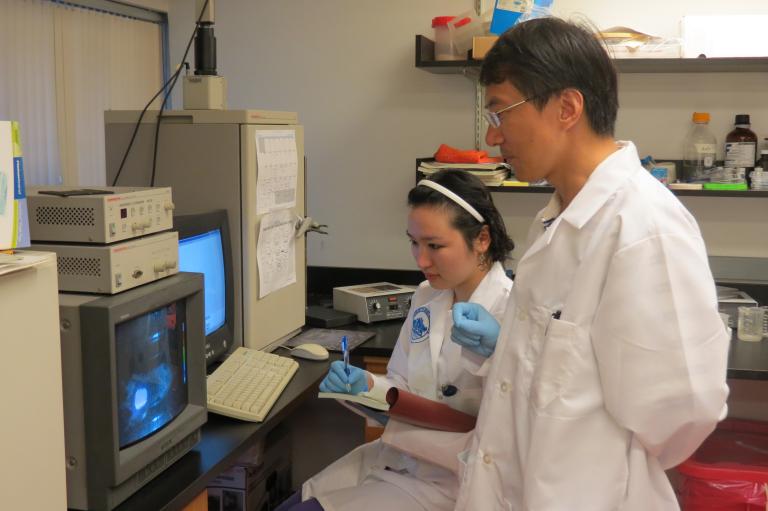
He’s learned that blue light exploits a convenient vulnerability found in many microbes: high levels of specific molecules, called porphyrins, that carry out key functions. These molecules happen to absorb light very strongly in the blue range of wavelengths. When light hits the porphyrins, they get “excited,” says Dai, triggering reactions that release bursts of reactive oxygen species into cells. Those highly reactive oxygen molecules crack the cells’ membranes, break their DNA, and oxidize proteins and lipids. Damage piles up until the cells die.
What makes this process so interesting, Dai says, is that it appears less likely than antibiotic drugs to induce resistance. Traditional antibiotics tend to exploit a precise mechanism in the bacteria, like a single enzyme or cellular process. The drugs wipe out most of the bugs, sparing only those that might have a small genetic mutation that helps them withstand its mechanism of action. As those survivors multiply, the antibiotic loses effectiveness. In contrast, the reactive oxygen molecules generated by blue light damage many processes and parts of cells at once. There’s no simple way for microbes to evolve an escape route. Dai has even conducted experiments exposing bacterial communities to repeated rounds of light to try to induce resistance, but he found no evidence that the effectiveness of the treatment waned over time.
Another perk of blue light is that animal cells appear to be relatively unharmed by the mechanisms it exploits. Human cells contain far lower levels of porphyrins than most bacterial cells, Dai explains, making them less susceptible to the light. We also tend to have better defenses against reactive oxygen species, as well as larger, more complex cells that are harder to kill.
Still, some studies have suggested that higher doses of blue light can affect human cells’ energy levels or their ability to cope with oxidative stress. And Dai has found that different bacteria have different levels and types of porphyrins, which makes some bugs more susceptible than others to the treatment. “We’ll need to find therapeutic windows that are safe to humans while effectively killing different pathogens,” he says, noting that this is true of any drug, including standard antibiotics.
Illuminating traditional treatments
To reduce the doses of light needed to treat complex infections, some researchers are finding ways to amplify blue light’s effects. Mei X. Wu, an HMS professor of dermatology at Mass General, found that pairing a gentle dose of blue light with a topical solution containing the active ingredient in oregano essential oil eliminated around 80,000 times more MRSA bacteria than blue light alone. The compound, called carvacrol, works as a “pro-photosensitizer,” Wu says, converting to compounds that magnify the production of reactive oxygen molecules in bacteria beamed with blue light.
To identify substances that synergize with blue light, Wu and colleagues screened dozens of compounds from plants used in traditional Chinese medicine. The Wellman Center researcher, who was born in China, suspects that blue light’s utility in medicine dates back further than most people realize.
Until recently in human history, Wu explains, people tended to work outside under the most prominent natural source of blue light: the sun. Around one quarter to one third of the light in daylight is estimated to be within the blue range of wavelengths. Perhaps blue light is a missing link that helps explain why traditional plants like thyme were used to combat skin infections in the past but appear to be less effective in modern lab studies.
“In China, before we had antibiotics, the countryside doctors could treat infections; they’d just grab a special plant,” she says. “The plants were very effective, because people got a lot more sunlight.”
Bringing blue light to the bedside
While blue light’s effectiveness in petri dishes and animal models has been impressive, Gelfand and Negri caution that it’s still several steps away from use in the clinic. Some blue light devices are already approved and used to treat acne in humans, but “those types of devices use lower power than the one we’re studying now,” says Negri.

Photo: courtesy of the Mass General Vaccine and Immunotherapy Center
In 2025, Negri, Gelfand, and colleagues tested their blue light treatment on MRSA-infected wounds in a swine model — the closest correlate to human skin. It was the first published study of this type of more powerful, superbug-killing device in a large animal model. Attaching the silicone bandage atop the wounds, they beamed blue light for around an hour and a half each day. By day two, the change was dramatic: MRSA levels in the treated wounds dropped by more than 99.99 percent compared with wounds that weren’t treated.
Although hurdles remain — like engineering tweaks that make the device less expensive to manufacture and a better understanding of optimal dosing and side effects — the researchers are confident that the findings bring the device a step closer to clinical trials in humans.
Other devices being developed by HMS scientists could soon follow. Some even deliver the treatment to places light typically doesn’t reach. For example, Dai and colleagues have been developing an ear tube embedded with a tiny glowing laser that could one day be used to combat the bacterial biofilms that cause recurrent ear infections in children who receive the tubes. At Mass General, orthopedic surgeons created an optical fiber with the potential to illuminate spaces inside the body, like around joint implants, to stop drug-resistant infections.
The treatments represent important progress in a broader, multipronged strategy that will be needed to fight the mounting threat of superbugs.
“We don’t expect blue light will replace antibiotics; rather, it will augment antibiotic therapy, hopefully reducing the number of days you need systemic or oral antibiotics,” says Gelfand. “Anything that can reduce microbial resistance will ultimately result in lives being saved, money being saved, misery being saved. It behooves us to find every mechanism we can possibly use to achieve that goal.”
Molly McDonough is the associate editor of Harvard Medicine.