The Local Lessons Behind a National Vaccination Campaign
When Raj Panjabi was asked to help lead the national response to the COVID-19 pandemic, he drew on his experience working in the community of Chelsea, Massachusetts
Fall/Winter 2026
- 7 minute read
- Perspective

Volunteers in Chelsea, Mass., distribute aid to members of the community. In the spring of 2020, Chelsea had one of the highest rates of COVID-19 infection in the United States.
Photo: Erin Clark/The Boston Globe/Getty Images
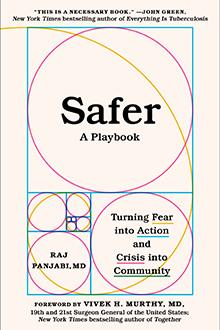
This article has been adapted from Raj Panjabi’s new book, Safer: A Playbook — Turning Fear into Action and Crisis into Community.
The stay-at-home order that the Massachusetts governor declared in March 2020 was both familiar and unfamiliar.
Being mandated by authorities to stay at home is something I faced often as a child living in Monrovia, Liberia: curfews, lockdowns, stay-at-home orders. I came to know that these were ways for a government to both keep a community out of harm’s way and exert control over it. Experiencing a “lockdown” in America because of a public health emergency? That was new.
The focus of state officials seemed well intended: Stay home to keep out of the virus’s path. We were asked to stay away from anyone who wasn’t a member of our household; to work from home, shop from home; to have groceries and anything else we needed delivered to our front doors. Through the long weeks of March 2020, each of which felt like a year, I worked all hours in our tiny attic guest room. I rarely made it past our front door. I did as I was told.
New emails appeared daily from Mass General Brigham hospitals, where I was still on the medical faculty, and where we had twice as many patients as we had room for in our ICUs. Our hospital leadership sent out regular calls for more doctors to volunteer to serve, especially as health workers were falling sick. While I had kept my medical license active, my focus had shifted to teaching and research at Harvard Medical School, caring for patients in Liberia, and running Last Mile Health. I hadn’t kept up with even the basic computer systems that Mass General Brigham hospitals now used. What could I do? Just stay home, keep working, keep sanitizing, keep scrolling, scrolling, scrolling …
That’s when I saw it, a fact that shook me from my illusion of safety. In Chelsea, a community across the bridge over the Charles River, the rate of COVID infection had surged to one of the highest rates in the country: 3,841 per 100,000 people.
Back when I was beginning my internal medicine residency, in 2008, I had the opportunity to choose where my primary care practice would be based. I chose Chelsea. Nearly half of Chelsea’s residents were foreign-born, and I could see the story of my family’s journey to America in theirs. It was also one of the poorest cities in Massachusetts, with more than one of every five residents living below the federal poverty line. At the same time, it was a city recognized for its resilience and efforts to improve education, housing, and health care. Collaboration with community members — including asking them to serve on the board overseeing the health care center — reminded me of the work I’d done with Last Mile Health in Africa. I worked in Chelsea for all three years of my residency, serving as the primary care doctor for about 100 patients. The city has held a place in my heart ever since.
Now, in 2020, Chelsea was in trouble, real trouble. I suspected that the messaging around staying safe (messaging that was borderline comforting to me) wasn’t working for its residents. The social and economic barriers standing in the way of many of Chelsea’s residents made it infeasible to adopt most of the protection measures that were available. Many Chelsea residents lived in crowded apartments and had jobs as essential workers. Even those who could stay home often had household members who couldn’t. In Chelsea, “Stay home” wasn’t advice most residents could heed, not without outside support.
I knew we had to try a different approach in Chelsea.
Worse, as the residents began to fall sick, they had no way of isolating themselves or protecting their family members who were at greater risk, the immunocompromised and the elderly. With people living in crowded homes, and with new exposures piling up for the people still going to work as taxi drivers or grocery workers, the virus spread rapidly, including among high-risk groups. There was no place for these people to isolate. They could not use separate bathrooms, as the public health advice suggested; they could not sequester themselves on a private floor of the home or even in a private bedroom.
For Chelsea residents, public health guidance that focused on biological risk factors, without acknowledging the difficulties of their social conditions, was like no guidance at all.
As the vaccines for COVID started to become available, I knew we had to try a different approach in Chelsea. We had to create roads between medical authority and the community members who were being hardest hit by COVID and yet who appeared to have the lowest levels of trust in that authority. I had my suspicions about where that distrust came from: language barriers, the time restrictions on essential workers preventing them from getting to the clinic, and fear about vaccine side effects. But these were assumptions. I knew enough by then to know that, well, I might not know much about what was really going on. My colleagues at Mass General Brigham and Harvard Medical School asked a local community organization, La Colaborativa, for help.
Those conversations gave us the perspective and information we needed to bring our resources together and create a vaccine outreach program that could work on the ground. It would speak to the residents’ pressing needs: jobs, food, help with finding a place to get vaccinated and support getting signed up, and a location they felt safe bringing their kids, since they weren’t allowed to bring them to a hospital and were fearful as immigrants of going to mass vaccination sites organized by the federal government. La Colaborativa repurposed its neighborhood center, normally a site of cultural activities, to host vaccinators and vaccines. The Mass General Brigham team brought the vaccines out of clinics, out of our fancy Harvard teaching hospitals, and into that trusted and familiar place close to people’s homes. La Colaborativa partnered with clinics and hospitals to recruit seven doctors and nurses as volunteer vaccinators, and we named Sunday, April 11, 2021, “Vaccination Day,” and put everything in motion.
As I plunged needle after needle affixed to vaccine-filled vials into the shoulders of my patients, I asked them why they had come. They told me that in the days leading up to Vaccination Day, teams of residents walked the neighborhood to knock on their doors. They were educated by their neighbors about why, when, and where they should get vaccinated. These outreach workers scheduled their appointments. Because many had lost their jobs, including as grocery store workers or taxi drivers, they welcomed the additional help to apply for new jobs.
The outreach worked. In an area where vaccination rates had started to slow, door-to-door vaccine canvassing led to hundreds of people showing up to La Colaborativa’s neighborhood center to get their shots. In less than 50 days, Chelsea’s vaccination coverage rates equaled those in the rest of the state.
How were we going to ensure the latest booster reached all Americans at risk?
In 2022 and 2023, in between chairing convenings in the White House Situation Room, I represented the National Security Council at the White House COVID-19 Response Team meetings, to help coordinate the response to COVID at home and around the world. In those meetings, we would hear updates on the national COVID-19 response. Chief Medical Advisor Anthony Fauci shared the status of the latest COVID-19 vaccines and medicines in development by the NIH and its industry partners. CDC Director Rochelle Walensky highlighted the parts of the country where COVID hospitalizations and deaths surged. FDA Commissioner Rob Califf briefed us on the safety of the latest COVID-19 booster vaccine. Then-White House COVID-19 Response Coordinator Jeff Zients, and later his successor Ashish Jha, spoke alongside Surgeon General Vivek Murthy and Health and Human Services Secretary Xavier Becerra about the plan to roll out updated vaccines and encourage the public to take them.
As I heard them speak, I could not help but feel confident that science would give us the tools to end the emergency. But inevitably, Ambassador Susan Rice, then head of the U.S. Domestic Policy Council, would ask tough questions: How were we going to overcome vaccine hesitancy? How were we going to ensure the latest booster reached all Americans at risk? After shifts vaccinating people at La Colaborativa’s neighborhood center and on Mass General Brigham’s outreach buses in the town square, I wrote blog posts with lessons Chelsea could teach us about how to answer these questions. I shared Chelsea’s insights with the group, which had made “meet people where they are” the mantra of the COVID-19 response.
Learning from communities like Chelsea and others across America, we took a multipronged approach to ensuring equity in the COVID response. We reduced barriers to make vaccine access easy and convenient; we promoted policies to ensure people could take paid time off to get vaccinated, provided funding to pay for rides to vaccination sites, and promoted the use of walk-in appointments. We worked with community health centers and rural health clinics and ensured that two of every five federally funded vaccination sites in pharmacies were in areas with high social vulnerability. We supported mobile vaccination clinics and shots in churches, at workplaces, in barbershops and salons, and beyond. Of the millions of tests ordered by mail via COVIDtests.gov, two out of every five were shipped to the hardest-hit, highest-risk ZIP codes across America, and over 8,900 providers were empowered to carry out test-to-treat programs to lower barriers for patients to get COVID treatments at their local pharmacies.
Together with state and local health departments, health care providers, companies, and community organizations like La Colaborativa, the White House mobilized the largest campaign against a single disease in history — and, importantly, many state and local partners did it without the need for vaccine mandates. Instead, community nurses, pharmacists, and outreach workers led the charge, ensuring that nearly 300 million shots got into the arms of Americans.
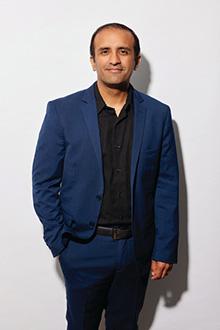
Raj Panjabi is an HMS lecturer on medicine and associate physician at Brigham and Women’s Hospital, a senior partner at Flagship Pioneering, and cofounder of Last Mile Health. As White House senior director and special assistant to the president at the National Security Council during the Biden-Harris administration, he helped lead the response to the COVID-19 pandemic and develop a playbook to respond to future public health emergencies.