Siddhartha Mukherjee’s Evolving View of Cancer
The physician and author on ecology, oncology, and cancer’s expanding cosmos
- 8 minute read
- Interview
Siddhartha Mukherjee

Siddhartha Mukherjee
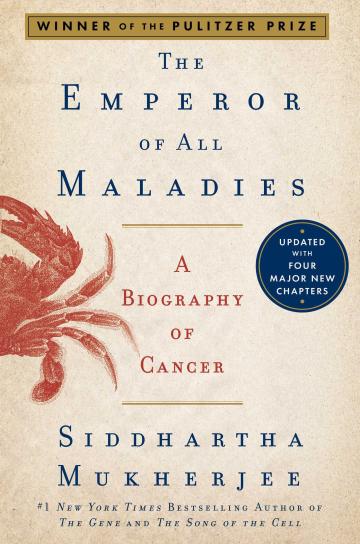
Siddhartha Mukherjee, MD ’00, was a fledgling oncologist when he first turned to writing to make sense of the “bewildering, shape-shifting disease” of cancer. Journal entries penned between fellowship shifts at Dana-Farber Cancer Institute helped the young physician process the emotional tumult of caring for patients and the scientific complexities of the disease they faced. Those notes later coalesced into The Emperor of All Maladies: A Biography of Cancer, published in 2010.
That Pulitzer Prize-winning book traced the story of cancer back thousands of years. But in the 15 years since its release, says Mukherjee, “so much has changed in the landscape of cancer prevention, detection, and treatment that it felt as if the book needed to be refreshed.” In an updated edition, published in late 2025, Mukherjee includes four new chapters that are “essential to understanding where we are and where we’re going,” Mukherjee says. “The book is a journey, after all.”
Harvard Medicine associate editor Molly McDonough caught up with Mukherjee to learn more about how his thinking, as well as the field itself, has evolved since the book first appeared. This interview has been edited for length and clarity.
One big shift in these new chapters is that you draw on ecological thinking — feedback loops, niches, environments — to understand cancer. Cancer seems less like a singular villain and more like an invasive species whose threat depends on the context. That also changes the role of humans in the story; we’re not just cancer’s target but also its habitat. How did you arrive at this new cast of characters?
A lot of it was inspired by work done many years ago by scientists and physicians like Stephen Paget, who coined the term “seed and soil” in the late 1800s. As I began to think more about some of the new therapies and even some of the new carcinogens that we’re discovering, I realized that it’s not just the seed that’s being affected in cancer but also the soil.
For instance, immunotherapy in some ways changes the immune soil that cancer grows in, but certain cancers have mechanisms to hide away from that immunological milieu. Now we’ve started finding ways to change that milieu. You may have heard of new drugs still in trials called PD-1/VEGF bispecific antibodies, which use the cancer microenvironment to prevent cancer cells from obtaining nutrients via blood vessels. Another example from my own research, published with Lewis Cantley [an HMS professor of cell biology at Dana-Farber] in Nature several years ago, showed that the metabolic milieu of cancer is very crucial, and that changing cancer metabolism by changing one’s diet, in combination with drug therapy, can change the way a cancer cell grows and behaves.
All of these lines point to the idea that the cast of characters, as you call them, includes not just a cancer cell as a lump floating in space in a vacuum. Rather it depends very much on the cells around it, how it co-opts those cells, how it changes the cells, and the physiology of those cells.
That shift in thinking, then, broadens the range of potential carcinogens beyond chemicals that directly damage DNA to anything that irritates or inflames our tissues. You write about walking through London after a conversation with Charles Swanton, whose research revealed preexisting mutant cells, or “sleeping assassins,” in healthy people that can be activated by inflammation from polluting air particles. You suddenly felt as if you were thinking of the world around “only in terms of chemical irritants.” How do you hold this knowledge without feeling overwhelmed by it?
Well, not everything is a chemical irritant, and not everything that we think is a chemical irritant is the kind of chemical irritant that cancer cells can benefit from. So the idea is not to stoke a kind of crazy fear of every type of chemical. After all, our bodies are made of chemicals; everything that we know is made of chemicals. Some people say, “Be very careful of chemical exposures.” Well, everything is a chemical exposure.
As far as we know right now, it’s a very particular kind of chemical irritant that seems to affect a very particular pathway of chemical irritation that cancer cells can utilize. We don’t know fully yet, and this is a speculation, but I think one common element is that this kind of irritation is particularly incited when normal, noncancerous cells — immune cells, et cetera — are not able to dispense of a particulate matter; they can’t metabolize it, they can’t eat it.
A good example is asbestos, a very potent inflammatory agent. One reason asbestos causes this inflammation is these tiny needles of asbestos go and lodge themselves in white blood cells called macrophages, and the macrophages just can’t eat them. They’re chemically inert. They can’t convert them into something else that can be metabolized.
I think it’s important that we eventually find laboratory tests for these irritants and figure out which ones are causing cancer and which ones are not. I don’t feel overwhelmed, but I certainly do avoid things that I think may activate or be responsible for that pathway.
Our growing culture of early screening, too, can feed into that collective anxiety about cancer. You write about how indiscriminate screening leads to an “avalanche of false positives” and cascades of care. How can clinicians do better at communicating the real limitations of screening?
I often use a very simple analogy. I say that if a 20-year-old never-smoker decides to go and have a whole-body CAT scan and finds a lump in their lung, that lump is unlikely to be cancer. A 70-year-old, long-term smoker who has a productive cough and a lung mass potentially has a much greater likelihood of having lung cancer.
Now, what am I really saying? There’s something called Bayesian statistics, invented by Thomas Bayes in the 18th century, that says that when you are detecting or screening for cancer in a person, you need to think about their prior risk factors and use that as part of the detection. It’s not just stuffing a man into a machine and out comes a picture and you figure out that it’s cancer. That is not how the real world works.
The book is really a plea: If we’re going to do screening at the population level, which many people want to do for good reason, we have to be clever. We have to be more thoughtful about how to then use that information so that the information is valid and interesting as opposed to just junk.
Speaking of Thomas Bayes, I think you described him in the new edition as “Alec Baldwin in a clergyman’s gown.” You have such a gift for making scientists into characters, making them feel vivid. How do you do it?
Well, it’s a little bit of back and forth. You have to do it with a very deft touch. You don’t want the whole world of science to become so character driven that you feel as though you’re inhabiting some kind of bizarre Russian novel. But we want to get a little picture, a glimpse. It has to be very little because the attention has to be on the discovery, on what was going on in their mental process. What are they thinking?
So what was Bayes thinking? Bayes was, interestingly, thinking about God, and he was thinking very deeply about what makes the world predictable: If God is unpredictable, why is the world predictable? But in the middle of all of this, you want to have a picture of what that man looked like. And so I thought about him, I looked at his picture, and he looked like he had kind of a very straight and narrow haircut, and I looked at his face.
I talk about meeting [cancer geneticist] Allan Balmain and noticing the hole in his cardigan, which tells you something, a little bit about a moment in time. People can certainly overdo it. It becomes a kind of shtick, and I hate that. But somehow you have to make people jump off the page.
That ability to humanize the scientific process feels so important right now. Do you think there is a misunderstanding among the general public about how science actually gets made?
I think people have a very big misconception about how science actually gets made. And unfortunately, that creates a big problem. When we cast people as scientific heroes — as if their ideas were not taken seriously for years and years and all of a sudden they become heroes because their idea comes blazingly back into life — we allow for a certain scientific anti-hero: “This person’s idea that all vaccination is terrible for you was not accepted year after year after year, until all of a sudden they came back blazingly correct.”
That’s not how science works. Science works very much as a community, and that community requires evidence. And when someone comes up with an idea that is completely out of the blue, the scientific community’s response is, “Well, we are open to the idea of it, but it has to be backed up with evidence. So go find the evidence and we will look at it systematically.” Science works because there’s a kind of wisdom in that community. I think a lot of people imagine scientists toiling alone in the laboratory, which they often do — but what people forget is that they’re reading scientific history, papers from the past.
I’ll give you a great example of that: the work by Charles Swanton and Allan Balmain that I describe in the prevention chapter. They knew that 50 years earlier, Oxford scientists had done an experiment very much like theirs, and they discussed it. They said, “Well, what about that paper by Philippe Shubik?” In Shubik’s experiment, he created a cancer and then put an inflammatory substance on top of it and found that the cancer grew enormously. And he didn’t know why it happened, but he said, “Listen, here’s my observation. I can’t explain it, but I’m going to put it out there for human beings to think about.” And of course, 50 years later, we now have explanations, mechanisms, and potentially a new theory of how cancer cells develop in their microenvironment.
I want to ask you about the Urdu verse you quote at the end of the book to sum up your journey as a writer and oncologist. “What I searched so earnestly for I never found; but just in that searching, I found the whole universe unbound.” To you, is that “universe” the universe of cancer, or something bigger that cancer led you into?
I think it’s not just the universe of cancer. It’s the universe of how human beings relate to human beings. What happens when you see your young brother dying in a cancer ward, as well as, of course, what is the biology of a KRAS mutation?
There’s a whole cosmos. When you become an oncologist, you enter a cosmos, and that’s a human cosmos. It’s a scientific cosmos. It’s a cosmos of social relations. Everything comes together at that fine moment, the minute you meet that patient — it’s as if multiple worlds are spiraling. I would say galaxies of worlds come together in that moment, and it’s very touching, but it’s also beautiful. You have to think about the patient. You think about their lives, but you also have to think about their biology. You have to think about their cells. You think about what happened to them, and how can I help?
I think that is the cosmos I’m referring to, and I think that only physicians and physician-scientists encounter that cosmos. It’s a great privilege.
Molly McDonough is the associate editor of Harvard Medicine.