How Cancer Cells Decide Their Fate
In studying a key cancer protein, Galit Lahav is revealing the importance of rhythm and timing in biology
- 5 min read
Galit Lahav
Photo: Matt Kalinowski

Galit Lahav
Photo: Matt Kalinowski
For 16 hours at a time, Galit Lahav peered into the microscope, watching and waiting.
It was the early 2000s, and Lahav, then a postdoctoral fellow in Israel, was captivated by a conundrum that had long frustrated cancer researchers. Two cancer cells growing side by side can be genetically identical, but when a dose of radiation or chemotherapy hits them and damages their DNA, they don’t always react the same way. One cell might trigger its own destruction, while its identical neighbor might pause, repair the damage, and start growing again.
“When cancer is being treated, the goal is to destroy all the cells in the tumor,” says Lahav, now the Novartis Professor of Systems Biology in the Blavatnik Institute at HMS. “If a small fraction of cells is able to resist the therapy, arrest temporarily, and then recover, we want to know what leads to this and how we can overcome it.”
Scientists already knew that these different cell “fates” are influenced by p53, a protein that responds to DNA damage by activating genes that help cells determine whether to recover or self-destruct. TP53, the gene that encodes p53, is the most frequently mutated gene in human cancers; when it is faulty, damaged cells can survive and multiply.
Researchers hoped that manipulating p53 activity could push cancer cells toward self-destruction. Most thought that p53 worked like an on/off switch, with higher levels of the protein pushing cells toward death and lower levels favoring repair. But previous studies had relied on single snapshots, measuring average levels of p53 across millions of cells. Lahav took a different approach. She engineered human cells to make a glowing green version of p53 and then created stop-motion movies tracking protein levels in single cells for hours at a time.
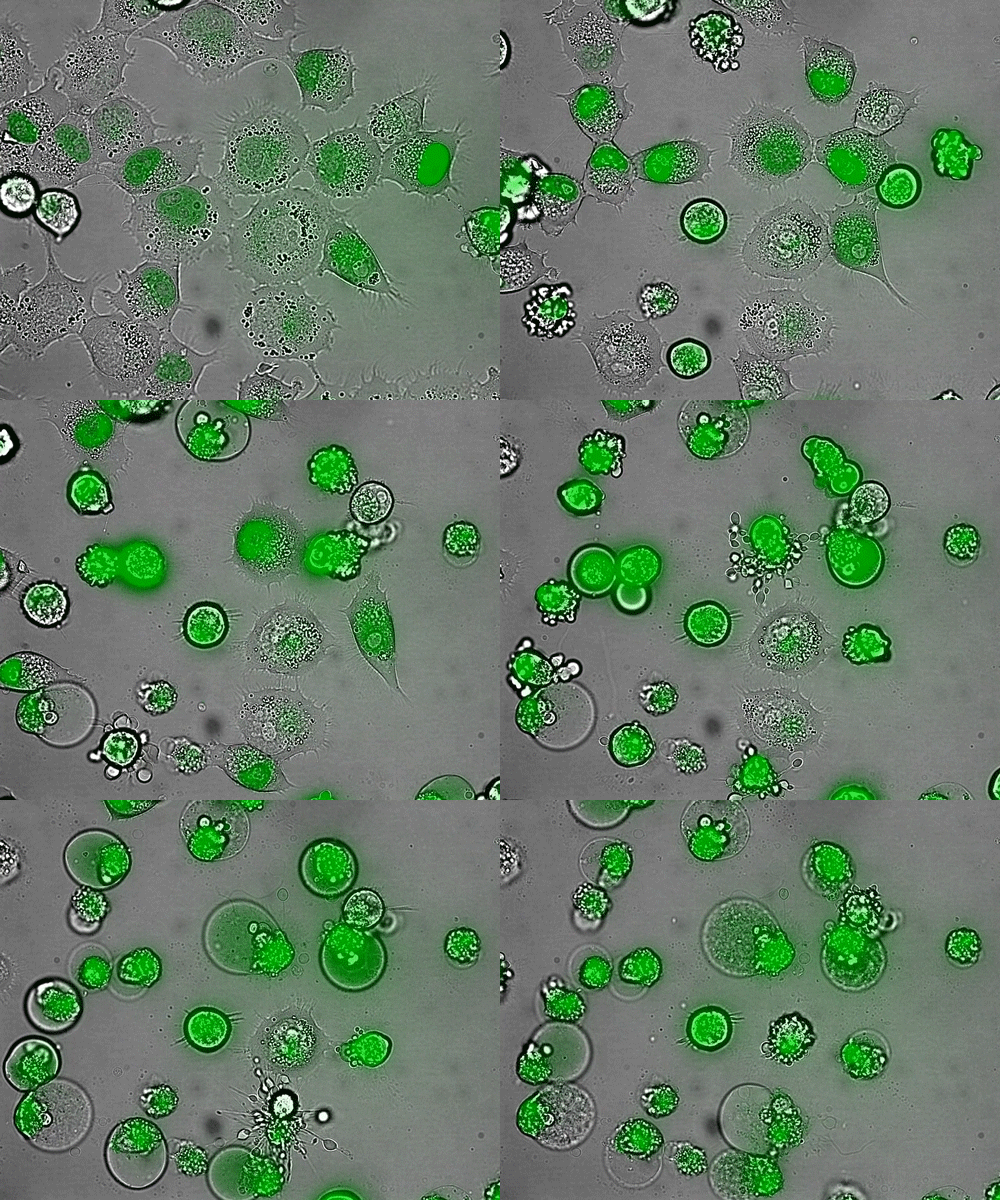
Image: courtesy of Galit Lahav
The work was tedious, but the effort paid off. As the hours passed, she noticed something other researchers had missed: Levels of p53 did not simply rise after the cells were exposed to radiation. Instead, they rose and fell in a series of pulses, and it was the patterns of those pulses — not the presence or level of the protein — that correlated with the amount of DNA damage.
“People tend to think about biology in terms of on and off, or the level of a protein,” Lahav says. But her work showed that although two identical cells might have the same levels of a protein in a single snapshot, that measurement doesn’t show whether the protein is rising or falling — or how many times that pattern has repeated. And the timing and rhythm of those patterns might matter more than the protein levels themselves.
Life-and-death decisions
Lahav is still studying the dynamics of p53, but those 16-hour stints hunched over a microscope are no longer necessary. Her HMS lab uses imaging systems that can autofocus and take photos at regular intervals for up to a week at a time, as cells sit in chambers that maintain ideal humidity, temperature, and CO2 levels.
She has gone on to show that those p53 pulses, or oscillations, exist in a variety of rhythms, and that cells use the specific features of these rhythms — such as the number, duration, spacing, and amplitude of pulses — to decide whether to repair or self-destruct.
Her work has helped to shift biology away from thinking of proteins as static switches and toward seeing them as dynamic signals. Think about it like an orchestra, Lahav suggests. It’s not just about who the musicians are and how loud they can play. “It’s the timing, the rhythm, how every instrument comes in,” she says. “That’s what matters.”
In the last few years, Lahav and colleagues have moved from looking at cells grown flat in petri dishes to more complex systems, like 3D clusters of cancer cells that mimic real tumors, human organoids, and mouse models. Through these new models, she’s discovered that the patterns of p53 activity vary across tissues, findings that could help explain why different parts of the body respond differently to radiation and chemotherapy.
I think using timing creates a much richer vocabulary for cells without needing new molecules.
If timing and rhythm influence how cells respond to treatment, then the timing and rhythm of a treatment could be just as important as what’s in a drug itself. Indeed, Lahav and colleagues have shown that changing the time interval between different elements of a combination therapy can change its combined effect. By disabling a protein that restrains p53 and then delivering a chemotherapy-like treatment at different time points, they found that a short interval between the treatments killed cancer cells more effectively, whereas a longer wait led to cancer cells resisting attack. Earlier this year, they demonstrated that stimulating cells with a small molecule at a frequency matching their natural p53 cycles can amplify the protein’s oscillations — kind of like how pushing a child in a swing at just the right time helps them swing higher.
But while researchers can watch proteins oscillate in cells in the lab, physicians can’t do the same within a patient’s tumor. Lahav and colleagues are therefore developing ways to link the patterns they observe in the lab with signatures that can be captured in clinical snapshots, such as biopsies, so that physicians can identify the best treatments and personalize timing for each patient.
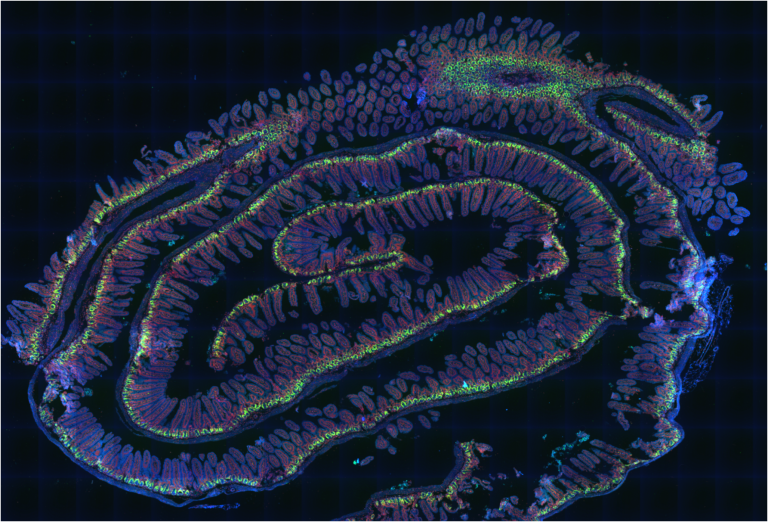
Image: courtesy of Galit Lahav
A dynamic view
Lahav’s work fits into a broader effort to understand a concept called dynamics: how the activity of molecules changes over time and the information those patterns carry. Evidence from other researchers suggests that timing and rhythm are important dimensions of cellular communication far beyond p53, and even beyond proteins in general.
Researchers at HMS, for example, found that the production of proteins in the body oscillates with the circadian clock, suggesting that diseases may not only arise from making the wrong proteins but also from making the right proteins at the wrong time. Neuroscientists found that neural signaling depends on the patterns and timing of signals fired, not just on whether neurons are active. Reproductive endocrinologists concluded that the same hormone, GnRH, can stimulate different reproductive hormones depending on the rhythm and frequency of the pulses with which it’s released.
“What we see again and again is that every study that develops the tools to look at dynamics reveals new mysteries,” Lahav says.
The work raises a provocative question: Why would evolution favor encoding information through timing? It’s something Lahav thinks about a lot.
“I think using timing creates a much richer vocabulary for cells without needing new molecules,” she says. “If a protein can only be on or off, the cell has only two messages it can deliver. But if you now talk about pulses of different amplitudes and duration and frequency and delay and slope, you can encode many different instructions with just one gene or protein.” Such patterns could also help cells filter out meaningful information from constantly fluctuating molecular noise.
When Lahav first started looking at p53, reviewers of her papers and grants criticized the fact that she hadn’t discovered a new gene or a new connection. “It took time for people to understand that this is a completely different layer we’re exposing,” she says.
One of her mentors, Marc Kirschner, founding chair of the HMS Department of Systems Biology, understood it. Today, as chair of the same department, Lahav encourages junior faculty to pursue their own out-of-the-box questions.
“[Kirschner] convinced me how important it is to protect space for creative, high-risk ideas, even if they don’t align perfectly with trends,” she says. “P53 fascinated me so much that I took a risk. There was no guarantee that it would pay off, but it felt like I didn’t have any other choice.”
The work may have been unconventional, but to Lahav it has always seemed obvious that life unfolds over time and therefore must be studied that way. “Nothing happens in one snapshot,” she says. “Life is dynamic.”
Molly McDonough is the associate editor of Harvard Medicine.