The Long Game of Microbiome Science
Looking beyond the hype, three experts explain what research on the gut microbiome might actually deliver
- 8 minute read
- Feature
Illustration: Leila_Divine/Getty Images Plus

Illustration: Leila_Divine/Getty Images Plus
Dennis Kasper’s patience has paid off. For years, the work he and colleagues did to understand the collection of microbes that make up the human microbiome attracted little attention outside the scientific community. But that changed about two decades ago, when his research began to suggest sweeping connections between bacteria in the gut and human health.
Within a few years, the microbiome was everywhere. Alongside a growing consumer market for probiotics and related products, investment into microbiome-related therapeutics boomed. More than 200 companies launched in the decade following 2010, backed by billions of dollars in venture funding, pursuing gut-based drugs, diagnostic tests, and personalized therapies.
The enthusiasm was understandable — the science was genuinely exciting — but it outpaced what research had actually established. Most clinical trials failed to deliver, and investment in the sector contracted sharply.
“The field went wild with hundreds of companies making probiotics,” says Kasper, the HMS William Ellery Channing Professor of Medicine at Brigham and Women’s Hospital and a professor of immunology at HMS. “But based on work from our group and others, we suggested that the probiotic approach likely wouldn’t work, and unfortunately, it didn’t.”
Why not? “Well, the microbiome’s complicated,” Kasper says. “I mean, it’s really, really complicated.” With so many microbes residing in the body, each with thousands of genes that can impact health, he adds, “the situation is actually more complex than understanding the human genome.”
What has worked is the kind of deliberate, mechanistic research Kasper has developed and practiced all along. A growing body of research now suggests that the microbiome’s medical significance may be even broader than imagined — extending not just to gastrointestinal conditions but also to the immune system, metabolism, and even the brain. The progress has come not from moving fast, but from moving carefully.
“The microbiome has basically been an undiscovered organ of the human body,” Kasper says. “It’s difficult to study, but it’s incumbent upon us to understand it.”
Focusing on microbes
Over his five-decade career at HMS, Kasper has watched bacteria’s reputation change from germs to be scrubbed away to potential cures and preventive strategies in capsules.
When Kasper graduated from medical school in the late 1960s, he, like many of his contemporaries, was first interested in how such bacteria might drive infections and other problems. “I originally came at the microbiome from the perspective of disease,” he says. But in the decades that followed, Kasper and other scientists revealed that the microbiome is much more significant; it’s an essential component of human biology that shapes almost every aspect of our health.
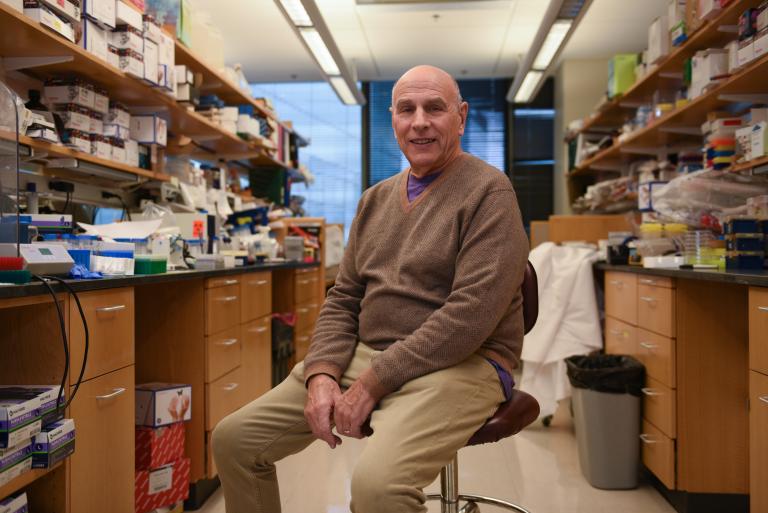
Photo: Rick Groleau
While a single human body might host hundreds of different types of bacteria, many scientists who study the microbiome painstakingly examine species one by one.
Kasper is one of those scientists. He’s spent much of his career focused on a single species called Bacteroides fragilis. A sausage-shaped, anaerobic bacterium, B. fragilis usually resides in the gut, but early in Kasper’s career, he found that serious infections occurred when this microbe contaminated otherwise sterile parts of the body. Growing the bug in the lab to learn more about its biology, Kasper found that sugar molecules it produces called capsular polysaccharides could help it cause or prevent disease.
By the early 2000s, new technologies emerged that transformed the questions Kasper could explore. Advances in DNA sequencing meant that scientists could extract DNA directly from samples of human stool or saliva and analyze genetic material from entire microbial communities at once. They could identify thousands of species simultaneously and figure out what effects they might have on their hosts’ bodies. Meanwhile, advances in chemistry gave scientists like Kasper new tools to isolate and characterize the complex molecules that bacteria make.
As Kasper examined B. fragilis’s genetics and the chemistry of those sugar molecules it produces, he learned that some of the molecules can act like teachers for the host’s immune system, helping it strike the right balance between inflammation and tolerance. And that process could influence how immune cells develop and affect a person’s risk of developing certain diseases.
That finding, published in 2005, provoked a big shift in thinking and raised important new questions. Could disruptions in the gut microbiome contribute to autoimmune or inflammatory diseases, like inflammatory bowel disease, allergies, or multiple sclerosis?
“The immune system was previously thought to be only genetically influenced,” Kasper says. “But in fact, so many parameters of the immune system depend on the microbiome to develop. Without the microbiome, we really are immunodeficient.”
Decoding molecules
While DNA sequencing yielded important new insights, it also revealed just how complicated the microbiome is. Besides the sheer range of microbes that can live within humans, sequencing showed vast variations in microbiome composition between individuals.
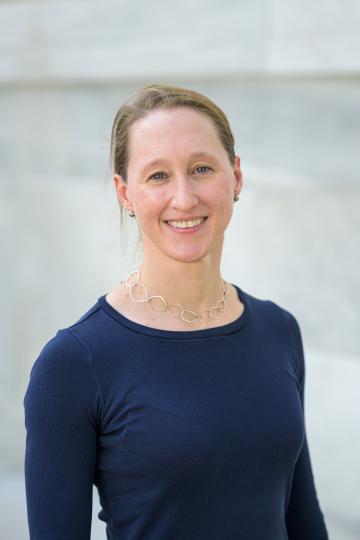
“You and I probably have different types of Bacteroides in our gut, even if we’re both living in Boston and presumably eating a similar diet,” says Sloan Devlin, an associate professor of biological chemistry and molecular pharmacology in the Blavatnik Institute at HMS. “That has been sort of a head-scratcher for scientists. So sequencing was a starting point, but not the be-all and end-all of microbiome understanding.”
Devlin started her research career in the 2010s, right after sequencing technologies exploded. By that point, myriad studies had been published linking microbiome composition with different diseases and health outcomes. The evidence was compelling, but it wasn’t causative. As a chemist, she saw an opportunity to move the field beyond those correlative links. She decided to figure out what molecules microbes are producing in the body and how those molecules might shape health.
Her research has revealed that while gut microbes can vary between individuals, different strains of bacteria often share common genes that encode similar proteins and enzymes. “Those molecules are core,” she says. “So even if you and I have different species of Bacteroides in our guts, they are making the same molecule.”
She’s also helped link those core molecules processes that can influence health. Using mice engineered to carry specific human gut microbes, for example, Devlin and colleagues showed that those microbes chemically modify bile acids in the gut into new compounds that act like hormones to dial up or down metabolism. In another set of studies, they demonstrated that gut bacteria can transform human steroid hormones into allopregnanolone — the same molecule used in an FDA-approved drug for postpartum depression.
The findings point to a potential future approach to drug development that’s based not necessarily on microbes themselves but instead on the molecules they make. “We have decades’ worth of precedent of pharmaceutical companies developing and getting FDA approval for small molecules,” Devlin says. “Down the road, opening up the small molecule drug-discovery space to the microbiome field is an exciting way to go.”
Bridging gut and mind
More recently, scientists have started to understand that some of those molecules produced by bacteria can send messages that reach the brain, something many synthetic drugs struggle to do.
Jun Huh, a professor of immunology at HMS, has been exploring different mechanisms through which those signals travel. Some molecules produced by bacteria can interact directly with neurons in the gut; others can pass into the bloodstream and make their way across the blood-brain barrier. Huh’s lab focuses on a third mechanism: microbe-produced molecules that corral immune cells to migrate from the gut to the meninges outside the brain, where they emit signals to the nervous system. These processes could help explain long-noted links between gastrointestinal symptoms, immune abnormalities, and altered brain development — and they imply that microbiome research has implications for even more conditions than previously thought.
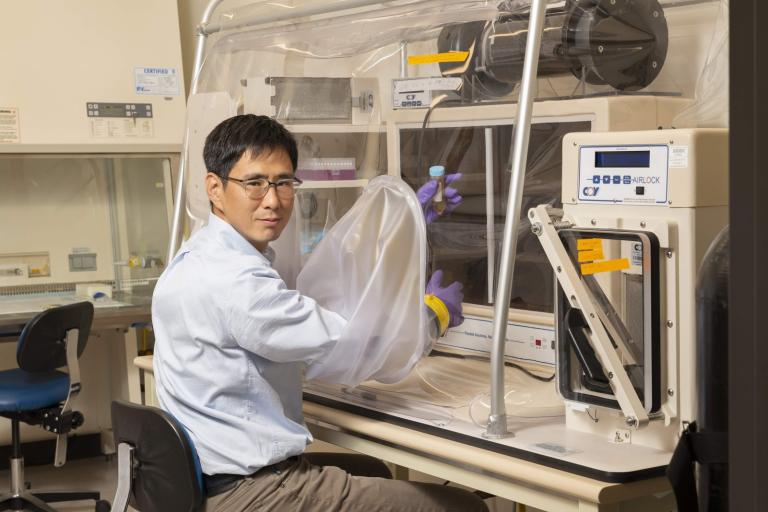
Photo: Anna Olivella
“These findings are really exciting,” Huh says. “There is data suggesting that the microbiome not only influences inflammatory diseases like IBD but also neurological disorders like Alzheimer’s, Parkinson’s, and even autism.”
At HMS, Huh co-directs a facility with Kasper that allows his lab to study microbiome-brain links with a level of control and precision very few facilities worldwide can match. The lab raises mice that are “germ free” — that is, born without a microbiome. Researchers can introduce specific microbes or groups of microbes without fear of contamination from the surrounding environment; at the same time, they can continuously monitor the animals’ behavior, such as how sociable they are.
Huh and colleagues have found that simply removing gut bacteria from mice that carry Alzheimer’s or ALS-related gene mutations is enough to change their behavior and likelihood of developing neurological diseases. Likewise, introducing specific microbes or groups of microbes from healthy donors or from people with disease can also affect those outcomes in measurable ways. They’ve also found that removing the gut microbiome can mitigate autism-like behaviors in mice with a genetic predisposition to autism, and that altering the maternal gut microbiome in certain ways during pregnancy can reduce autism-like behaviors in offspring.
Huh says that the microbiome could potentially be used to target neurodevelopmental and mental disorders in humans. But “we’re only starting to understand a very little aspect of this whole process,” Huh says. “Hopefully the type of work we are doing at HMS can inform other investigators on the clinical side and lead to translational work.”
Slow and steady science
Kasper, Devlin, and Huh all agree that harnessing the microbiome will likely not be as simple as packaging bacteria in pills.
If ever faced with frustration over the pace of progress, Devlin argues that the microbiome is still a young field. She points to cancer research as an example. “There was a lot of basic discovery that preceded immunotherapy,” she says, “decades’ worth of research before there were breakthroughs.” She anticipates scientists will need at least 10 years of “fundamental mechanistic research” into the microbiome and that progress will require strong multidisciplinary coordination.
Success may not be as straightforward as swallowing probiotics, but it can take unexpected forms. Recently, Kasper partnered with Arlene Sharpe, MD ’82 PhD ’81, chair of the HMS Department of Immunology and the Kolokotrones University Professor at HMS, applying his microbiome research to cancer treatment.
Immunotherapy works by releasing brakes on the immune system so it can attack tumors. But Kasper and Sharpe found that just as that polysaccharide from B. fragilis influences immune cells, there are microbial molecules that shape how immune cells respond to cancer treatment — and that may help explain why some cancer patients don’t respond as well to certain immunotherapies. When they blocked the activity of these microbiome-derived molecules in mice, they found that the mice’s response to PD-1 checkpoint immunotherapy improved.
It’s one of many examples showing how a better mechanistic understanding of the microbiome — and the molecules it produces — might improve medicine. And it’s one of many reasons that, 54 years after he started his career at HMS, Kasper is still following the trail of molecular breadcrumbs that gut bacteria leave.
“If someone said to me, ‘Why are you studying this?’ I’d say, ‘We try to understand biology, and the microbiome is just a major determinant of basic human biology,’” Kasper says. “It’s far more important than we thought it was even 20 years ago.”
Molly McDonough is the associate editor of Harvard Medicine.